Feature
Brand kit and shared partials
Twenty templates usually means twenty copies of the letterhead, and one of them still carries the old address. The brand kit and shared partials keep what every document repeats in one place.
Free plan with 100 units a month, no credit card
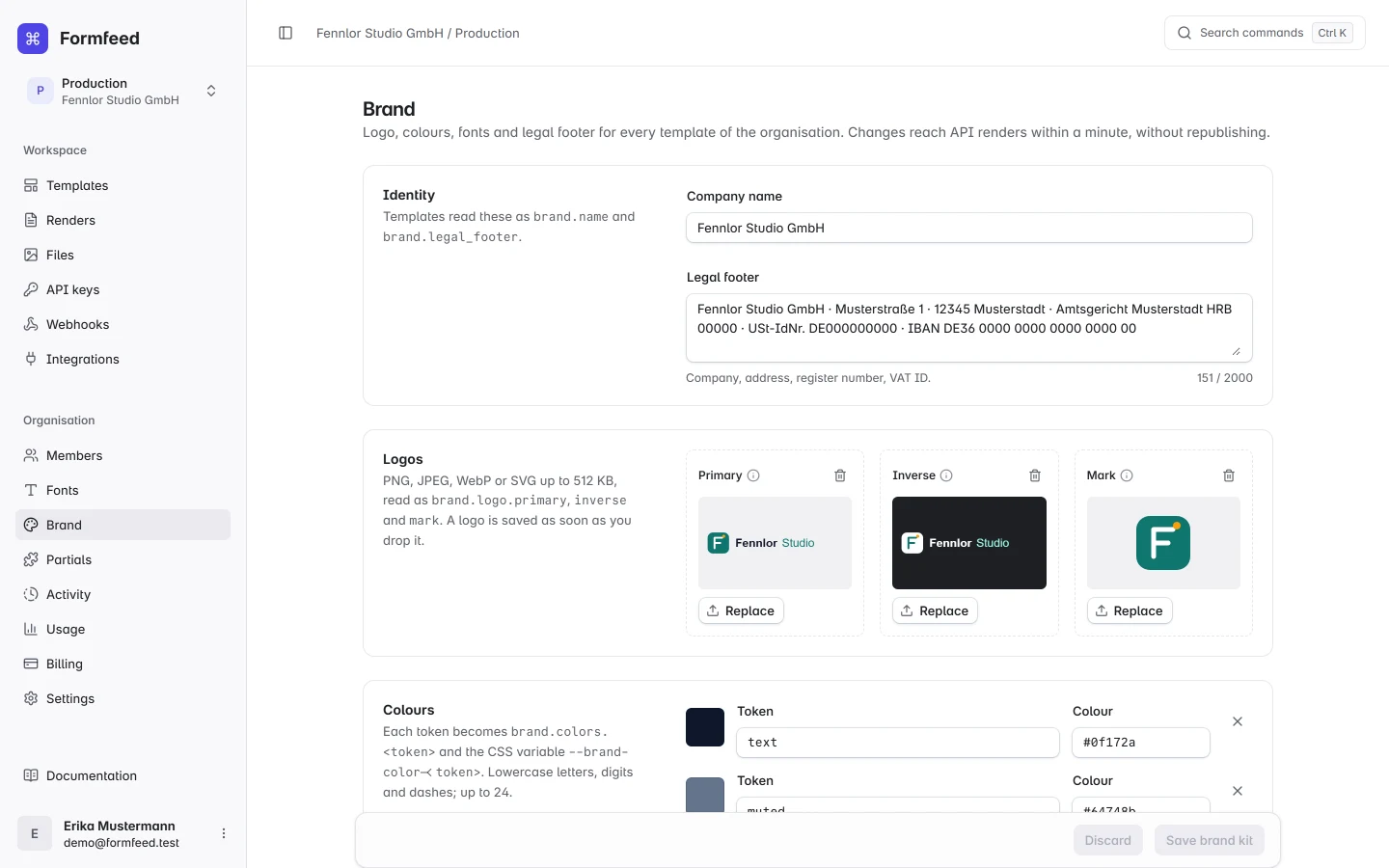
One brand kit per organisation
Company name, legal footer, colour tokens, heading and body fonts, three logos and the paper and margins new templates start with. Templates read the kit as a variable and as CSS variables, and logos work in headers and footers too.
<header style="border-color: var(--brand-color-primary)">
  {% if brand.logo.primary %}<img src="{{ brand.logo.primary }}" alt="{{ brand.name }}">{% endif %}
</header>
…
<footer>{{ brand.legal_footer }}</footer>
Shared partials
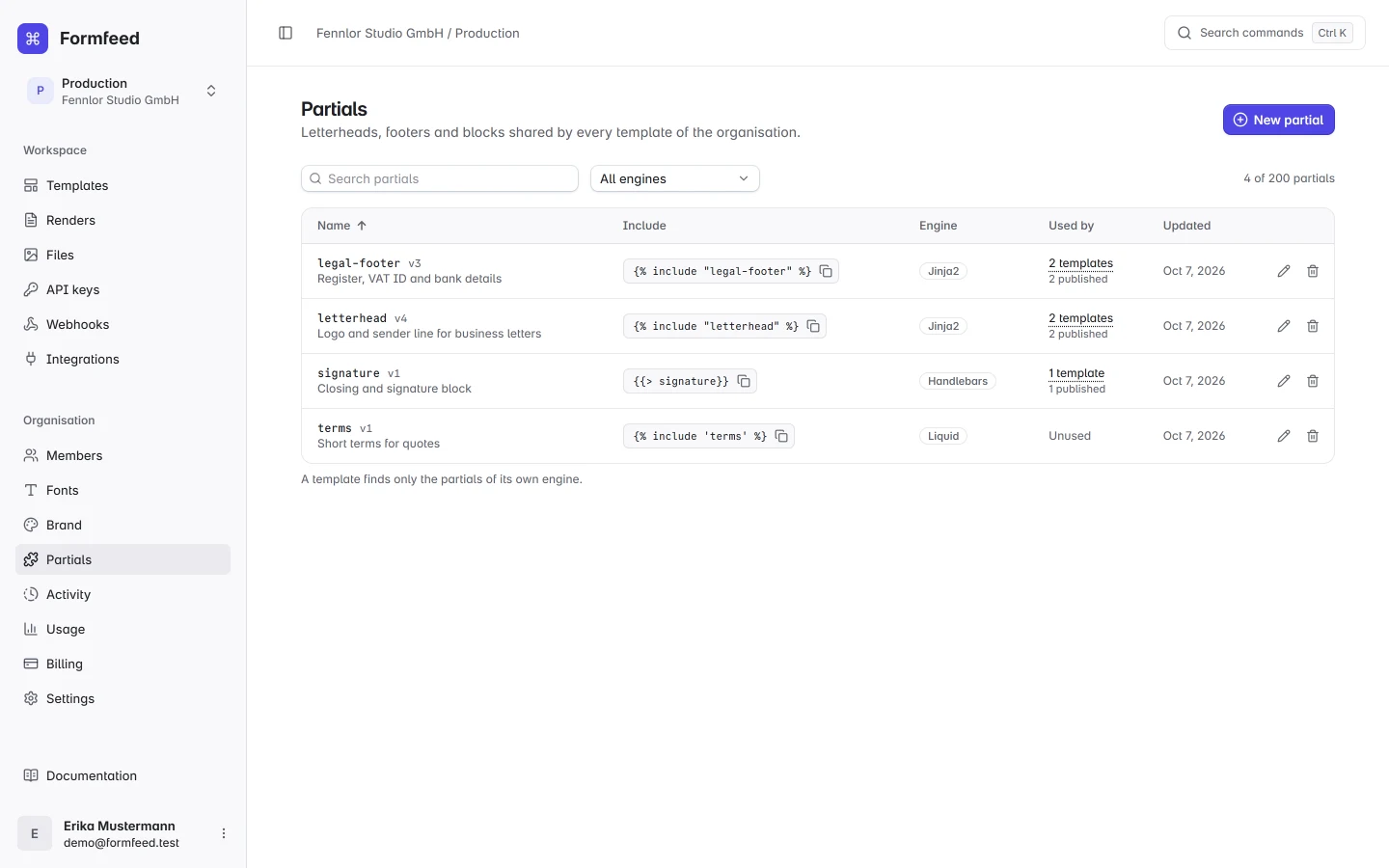
Letterheads, footers, terms and other fragments live on the Partials page and are included by name, like a template’s own partials. Editing one lists the templates that change before you save.
- Live for published templates. Renders use the new version within a minute; nobody republishes twenty templates for a new address.
- Recorded per render. Every render records the brand kit version and the partial versions it used, so an archived document can still be explained.
- As files too. The command line tool pulls the kit for local previews and syncs partials with a folder in your repository, with conflict detection.
FAQ
- Which plans have it?
- The brand kit and shared partials are on every plan, with up to 200 shared partials per organisation.
- Who can change it?
- Owners and admins edit the brand kit; editors and viewers see it read-only. Owners, admins and editors can create and change shared partials.